Wasdale Green
By Sean Watkin
This short story was written for Halloween in 2018.
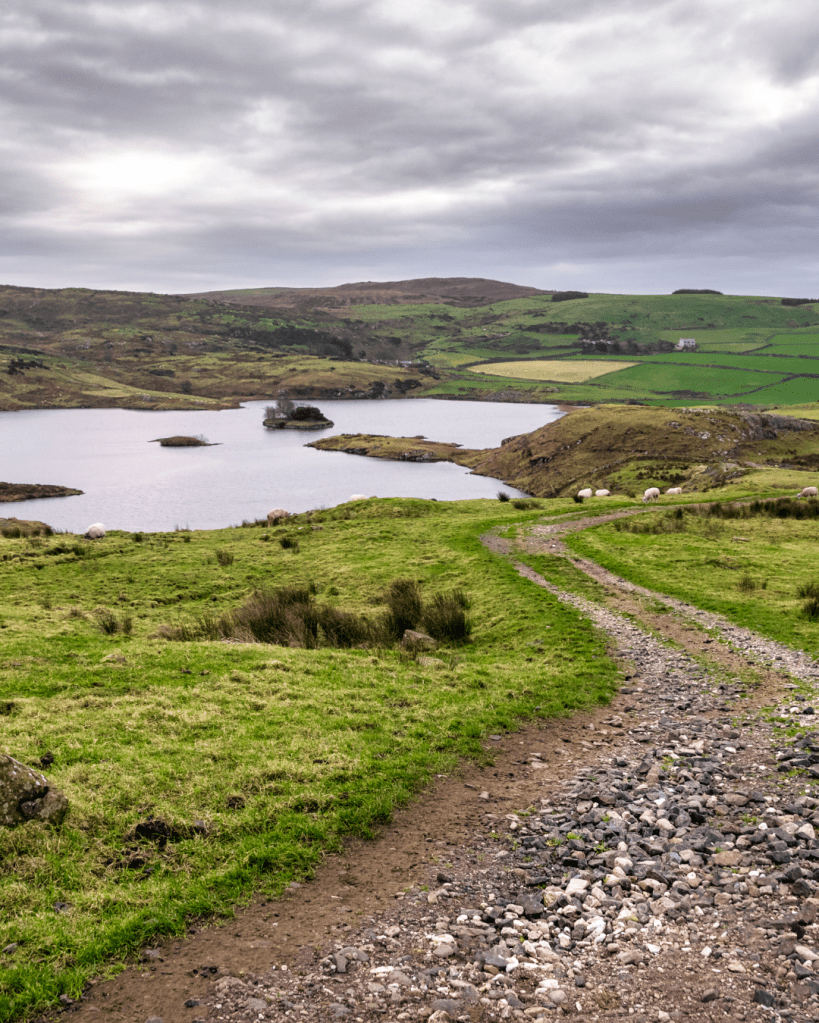
Wasdale Green
Mrs Curie placed the china teapot on the table, it chinked. It was decorated with pastel blue flowers and veined with tiny hairline cracks that had turned black over the years. It looked like it was about to fall apart.
‘Would you like some milk?’ She was one of those people who tried to mask their accent, as though it were some secret shame of hers. She never quite managed it and the drawn-out Cumbrian vowels leaked through when she was tired or busy.
I shook my head. I don’t think I’d spoken since the night I arrived at Wasdale Green. It had loomed up out of the valley like a black ogre, hunched, with its back to the rainstorm that rolled along the district, splashing and drenching and flooding. I could see a sign on the one-track road that read Wasdale Green Hotel. Bed & Breakfast. Vacancies. The latter was the only word that mattered right then. I needed a place to rest. I was exhausted.
The porchlight was lit, and light glowed softly from each of the front rooms. It was almost impossible to make out. As the hire car crunched on the gravel drive, the eyebrow arches of the hotel’s windows came into focus and I could tell that inside it would be a cold place. The glass would be single pane, a fire would burn in every room and sometimes, when the storms were bad, the electricity would fail and plunge the place into black.
I ran from the car, my overnight bag on my shoulder, to the tiny shelter above the red door. There was a brass bell hanging next to it, it ting-tinged with each heavy spot of falling rain; in the centre of the door, a huge knocker, some sort of bird of prey. I lifted it and it felt like lead. I’d not eaten since the argument with Barry, I barely had the energy to keep my eyes open. There was something missing from my arms, a weight I couldn’t quite place. I noticed then that the porchlight was bare flame, burning oil. It guttered behind the thin glass.
The door opened. I expected it to creak. It didn’t. Inside the door was darkness and set in it was a tiny, skeletal woman, a candle holder in hand, the wick burning and sputtering against the wind and rain. ‘May I help you?’ her voice was whispers. Her hands shook, but not from cold I didn’t think. From something else. She looked familiar to me.
‘I’m er…’ I looked back out at the lashing rain. ‘I was out hiking. I’m looking for a place to stay for a few days. I was hoping to camp, but….’ I held my hands up so the rain would fall into them. It was turning icy.
Her fish mouth straightened into a line, a smile of sorts, and she pulled the door wide open. ‘Come in, come in. You’ll catch your death.’
Inside, I expected the place to smell old. Like damp, or mildew, both masked by little bags of scented lavender in drawers and wardrobes and on sideboards and countertops. But this place didn’t have a smell. Nothing. The walls were painted dark green that was peeling away in places, especially around the doors, all of which looked old and heavy.
‘Forgive me.’ She stepped around the back of a small counter, on which was a single pen and a guest book. ‘I try not to turn the lights on where I can help it. We don’t have much call for guests out this way and power is expensive these days.’
‘That’s okay.’
‘Where have you come from?’
I bit my lip, unsure how to answer.
‘Well it’s awful weather to be out and about in,’ she said. ‘Let alone camping. Not many people take to camp on the fells at this time of year.’ She picked up the slim black pen, a sharp-pointed fountain pen, and in cursive, deliberate script, wrote the date. ‘What’s your name, my love?’
I gave my first name and maiden name, and handed over £85 in cash for my first nights’ stay. I was advised that I should pay night by night rather than in advance, should I change my mind. ‘Or,’ she said. ‘Should the place change it for you.’
She stepped around the desk and pushed open a door that led into a large front room, which was lit by a tiny lamp in the corner near the window, and a fire in the hearth. It was an old one and was dying. ‘Sit in here and I’ll set a fire in your room.’
‘Oh no, please,’ I put out my hand in protest. ‘It’s no bother, I’ll just get into bed. I’ll soon warm up.’
‘That’s not how things are done here.’ Her voice had an edge now, she whispered no more. ‘Please,’ she said. ‘Sit.’
There was a roll-top chair at the fire, and I sat. I stretched out, warmed my feet and somewhere nearby I heard the grumble of a purring cat. I didn’t have the strength to find it, so I just listened. My eyes were heavy, within minutes the room turned dark, and for the first time in weeks I dreamt of nothing.
‘Miss O’Brien?’ The voice hissed at me through the black, and slowly the large, high-ceilinged room became sharp again. She stood over me, her eyes as grey as her skin. She smelled like lavender and mint. ‘Your room is ready.’
She led me up two sets of stairs, each with a banister made of wrought iron, freezing to touch, painted black. On the landing between the first set and the second, there was a broad stained-glass window: a mother suckling a baby, wrapped in red swaddling. The rain outside slid down the glass. The mother cried for something.
‘My father made that,’ Mrs Curie said. ‘My husband called it the oldest story before he passed away. I suppose he was right. Do mothers ever stop caring for their children?’
‘I’m sorry to hear…’
She waved her hand at me. ‘Dead is dead. He had a life, and now he walks the fells and shore of Wastwater with our parents, I know it.’
The room she opened up was lit only by a crackling fire. She’d opened the windows to let the room air, but it still smelled stale. She put the candle down by the bedside, and leant out of the windows to drag them closed. The bed was a large double, covered in multiple blankets of different colours and cushions that didn’t match. ‘It’ll warm in no time. I’ve set the chair by the fire if you wanted to stay up a little.’ She moved to the door. ‘There’s books there on the shelf.’
‘Oh,’ I said. ‘Your candle.’
‘You keep it,’ she said. ‘I can see fine without it.’ She closed the door, and her feet clunked against the bare wood and down the stairs.
The fire popped and the rain clattered against the windows as though they were made of tin. I sat in front of the flames, tossed my coat over my knees, and closed my eyes. My head hurt, my joints, and my flesh throbbed. Everything was hurting. As the heat crossed the membrane of my skin, and sank deep into my tissue, into my bones, I nodded off again.
In the warm, sticky in-between sleep and wakefulness, I remember a knock at the door, and it had opened. There was someone there. Someone tall and thin. But I didn’t panic. I slept.
The spout of the teapot steamed, a stem of mist that bloomed after an inch or so, like a flower. It spread and dissipated into the air. I lifted it and poured the brown liquid into my teacup, carefully holding the lid on. Something flickered in my mind, an image. A tiny hand turning red and blistering under a stream of fogging water. It vanished just as the tea was spilling over the lip of the cup.
Mrs Curie was in the corner of the room dusting at her chintzy old ornaments and hadn’t noticed my accident.
I left the tea and headed back to my room. My coat, hat, and scarf were hung on the back of the door. But I couldn’t find my mittens, or my brown leather overnight bag. It wasn’t in the room.
‘Mrs Curie.’ I stood at the foot of the stairs.
She came out of the dining room, her feather duster in hand, sideways like a crawling crab. ‘Yes?’
‘My overnight bag,’ I said. ‘I can’t find it.’
She looked me up and down in my big puffer coat, matching hat and scarf, arching her eyebrow. ‘I don’t remember seeing an overnight bag. I don’t remember you bringing one in with you.’
The car boot was empty, except for a torch which I slipped into my pocket, and a jack. Nothing on the front seat, and only a baby seat in the back. It was battered and old, and the fabric was torn away in patches, showing the yellow foamy innards.
I closed the door, and turned to see Mrs Curie at the sitting room window, watching. It was getting dark out, and I checked the torch was still in my pocket. It was cold to touch.
The road down to the lake was a narrow one-track thing, barely wide enough for one car, and I wondered how the fuck I’d managed to navigate it two nights before in that rainstorm, in the state I was in. The warmth I’d held in my belly from afternoon tea faded with every step of my Hunter wellies. The wind whipped through the valley with the force of a cat o’ nine tails, and I thanked god at least I could find my hat and scarf.
I thought of the last day out with Mum at Southport Pier. After her final bout of failed chemotherapy, how she was wasting away before our eyes. It’s funny. When our loved ones usually die, we don’t see their bodies decay, that’s hidden from us. But with a person dying of cancer, we are witness to the body’s demise daily. Mum’s face had turned ashy, like an unclean ashtray, her hair thin cotton, and her eyes the shallowest shade of blue. She was no longer herself. She died before Barry and I married. I know that she’d have stopped it.
I had seen the lake from the gateposts of the hotel. It was hard not to, it was so vast. On the far side, the steep screes rose up from the water like impossible grey faces, and my heart palpated at the scene, at my presence in this place, at how tiny I was, how small my problems seemed here.
I neared the shoreline, and saw the road stretch to the left and right of me, and now the brown stony path I’d driven up didn’t seem like a road at all, but a footpath. There were track marks that sank deep into the dirt path, and veered off over the fells. A farmer after some lost sheep, I thought.
There was nobody here. I let that sink in. I was alone. The water hardly moved, a few ripples, but that was it. Patches of the lake looked like dark glass. I sat down on a massive rock, dropped here after the Ice Age glaciers melted. I’d read that somewhere. I sat, thought about Barry, and about how I wished I’d never seen his scrawny little face.
There are moments in our lives when we realise where things went wrong, the little decisions we make every day, not knowing that they could snowball into something bigger, and how those choices will affect those around you. As a species, we tend to leap before we look, and call ourselves stupid, irresponsible, foolish only afterward. Barry was one of those decisions, and in the days since I’d left, though it felt likes weeks, I asked myself one question: Why did you leave?
I didn’t know. The weight of some notion sat in my brain, but I couldn’t get at it or shift it or crack the husk of its shell. It was impenetrable.
I stayed at the lake until the sun was completely set, walking, and retracing my steps back and forth. I followed the light of the torch and finally arrived back at Wasdale Green just before dinner was served. I could smell the thick, meaty scent of some sort of stew. I wasn’t hungry, but ate it anyway. It was game, the meat was rich and red.
I went upstairs early, and left Mrs Curie napping in front of the sitting room fire, a half-read book open on her lap. I closed the curtains and ran a bath, let the water fill halfway up the wall of the bathtub, and stirred in Radox with my hand, until bubbles grew on top of the water like clouds. I sank into the warmth, listened to the bubbles fizz and pop, and as that searing pain from the night before returned heavier, I felt icy cold. As though I’d never be warm again. I climbed out of the bath, wrapped the dressing gown around me and, still wet, crawled under the bed sheets.
As I finally thawed, and sleep came and formed even more cobwebs in my mind, I thought of that small hand under the hot water, and felt a pang of agony. I looked at my own hand, scarred with skin twisting over itself, and in places, white like streaky bacon. Barry, I thought. Just before sleep, I heard the cat purring somewhere in my room. Getting louder, and louder. But it sounded like something else, something deeper, mechanical. A car somewhere far off. I shut it out.
****
The next day, I woke late and had missed breakfast. Mrs Curie was hoovering the landing beneath the stained glass window. It looked flat today, no light came through it.
‘I only serve breakfast until 10am, I’m sorry,’ Mrs Curie said. In truth I still wasn’t hungry.
I assured her that it was fine, that I’d take a walk down to the lake before lunch, but promised that I would definitely be back before 1pm.
‘Wrap up,’ she said. ‘It’s foggy outside.’
‘Oh Mrs Curie,’ I said. ‘Do you have a cat?’
She put her hands to her heart, her lip curling away from her teeth. ‘A cat? When my husband passed, his cat left and didn’t come back. I’m not an animal person.’
She didn’t seem like an anything kind of person, cats, children, or otherwise. I nodded with a smile and left, closing the door behind me. I stopped moving immediately and peered hard through the fog. Took a few steps down the drive before it dawned on me: my car was missing. There weren’t any tracks where it had been the night before. I went back inside, frantic. How would I get out of here?
‘Mrs Curie!’ I shouted. ‘Mrs Curie!’
She slipped out of the sitting room, the morning paper in her hand. It looked as yellow as her teeth. ‘Must you shout?’ she asked. ‘You’ll wake the dead!’
My car, I explained, was missing from her driveway. I recounted how I’d heard a car late last night before I went to sleep.
‘What are you ranting about?’
‘My fucking car!’
‘How dare you use such vulgar language in my home.’
‘I’m sorry,’ I said. I bowed my head, took a deep breath. ‘I don’t know how I’m going to get out of here without it. Do you have a phone I can use?’
‘I’m waiting for the repairman to come. They’ve been doing some work in the area, and the phone isn’t working.’ She placed the newspaper on the counter near the guestbook. ‘Are you feeling quite alright?’
‘I’m just worried about the car.’
‘Miss O’Brien,’ she smiled. ‘You arrived on foot.’
My mouth fell open, and I searched her eyes for the glimmer of any remnant of humour. There was none.
‘If you’ll excuse me,’ she said. ‘I have to change your sheets.’ She mounted the stairs.
I rested against the counter, my mind flooded. I remember driving. I remember shutting off the engine and closing the door and running up those steps. This place. This woman. There was something wrong there. My overnight bag and now the car.
I remembered putting the mobile in my pocket before I left the house three days ago, or was it six? I felt in the pockets and found nothing but a return train ticket that expired on the 15th of November. I looked at the calendar behind the counter, each day crossed off right the way up to the blank 1st of December. I couldn’t have been there that long. There was no way. On the counter, the yellow newspaper smelled musty. I moved it, it fell to the ground, and on the front page the date: 16th April, 1996. Over two decades old.
I ran from the house, left the newspaper on the floor, out into the fog. I followed the dirt path down toward the lake, where the road crossed it. The fog was thick here. I could hear the lapping of the lake’s shoreline, and wrapped my scarf around my lower face, protecting myself from the biting cold.
The tyre marks! I remembered seeing them yesterday. If I could follow them, I could maybe find the farmer, or the farm, and maybe a phone. They veered off across the fells, and I followed them for what felt like hours. Time moves differently when you can’t see the things around you.
The tyre marks stopped at the edge of a decline in the fells, and I could barely make out something dark in the reaches of the fog. I clambered down the decline, almost slid in the dewy grass, and came upon an overturned car.
My heart sank. In the front seat, the pale, dead face of the driver, her hands in red mittens, covered in shattered glass from the windscreen. In the backseat … oh god the back seat. The yellow foam had turned red and brown.
I raced back to the hotel, haunted by what I’d seen, knowing there was no hope the repairmen had been back to the hotel in this fog. But who would I call anyway? I ignored Mrs Curie and went straight to my room. I searched high and low for my mobile, and finally gave in.
‘My dear…’ Mrs Curie was at the door. ‘What are you doing?’ In her hands a tray with an apple and a glass of water.
‘I’m looking for a phone. There’s someone out there on the fells. They’re dead!’
‘Dead?’ She laughed. ‘Don’t be silly.’
I grabbed her skinny arms and shook her. ‘I’m being serious. I saw them both.’
‘Oh, you poor woman.’ She moved hair out of my face. ‘I’ve never seen you look so tired. Why don’t you relax and I’ll call father to have a look around the fells.’
‘Your father?’
‘Sh.’ She slipped by me, put the tray down on the end of the bed. ‘The repairmen came this afternoon.’
‘So call the police!’
‘There’s no use dragging them out here without any proof.’
‘I know what I saw.’
‘Like you know you drove here? Or had that overnight bag?’
She smiled at me and patted the top of my head. She turned away, closed the door behind her.
Was she right? Was I losing it? I went to the window and looked out, the fog was thicker. I couldn’t see anything. There was no world beyond the hotel.
I took a few bites of the apple, it was sweet and crunchy. A Pink Lady. I ran a scorching bath and stepped into the water. My eyes felt instantly heavy. I sank my shoulders into the water and shivered, as any trace of cold left my body. My vision became smoky, and I fought to keep my eyes open. I heard a tap at the door of the room, and a creak as it opened.
There were shadows in the bedroom, blasted large against the walls by the firelight, they moved and danced and hopped, and one had a candle holder.
I turned my head as the larger shadow grew smaller and smaller, as though it were coming closer. I saw a grey hand on the doorknob, another with a candle, and then everything turned black. I knew I wasn’t breathing, and my mind flashed with red and purple panic. It said, Get up. Keep going. Breathe in. Breathe out. Breathe.
No.
In the last few moments before the black came, I remembered. The fog. The road. Lucy crying. I looked through the rear-view, adjusted it to look at her. I tried to shush her and sooth her, but to no avail. A turn missed in the dirt road. Black. Screeching. Smashing. Lucy crying. The purring of the car engine as it stopped turning over.
I remembered, before the foggy dark seeped in, the mother and child in the stained-glass window.
 Sean Watkin